



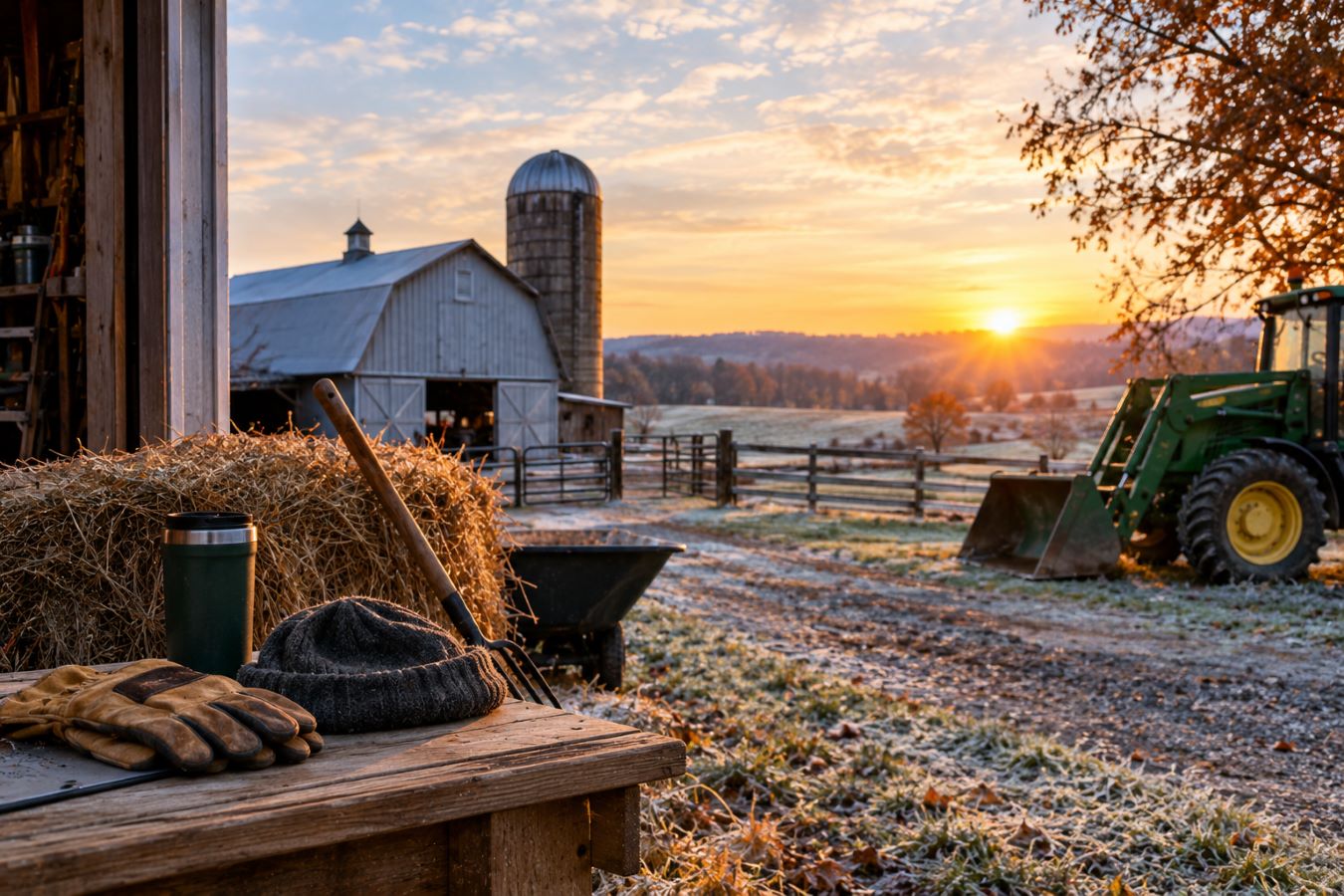
A loose gate latch or dwindling feed supply may seem manageable on an ordinary fall afternoon. Those same problems become more inconvenient when freezing weather, muddy access, or a busy schedule complicates daily chores.
October is a practical time to take stock. You can inspect equipment, organize storage, and decide which supplies you need before winter becomes the immediate concern.
A useful winter farm preparation checklist should reflect your animals and property. A household with a few chickens needs a different plan from a horse owner or someone managing several livestock groups. However, the basic questions are similar: Is the feed suitable and protected? Can the animals reach water? Are enclosures secure? Can you complete routine care reliably?
For farm and homestead owners in Nicholasville, Jessamine County, and nearby Central Kentucky communities, this guide offers a way to organize that review and prepare a focused shopping list.
Begin With an Inventory of Animals and Supplies
Before buying anything, list the animals you care for and the supplies already on hand.
Record species, numbers, life stages, and any feeding instructions you currently follow. Keep separate notes for animals with specific veterinary or nutritional requirements.
Then review your supplies:
- Bagged feed.
- Hay and other forage.
- Bedding.
- Feeders and waterers.
- Storage containers.
- Fencing repair materials.
- Cleaning and maintenance supplies.
Check labels, condition, and storage instructions. A bag in the corner is not necessarily usable inventory if its identity is unclear or its contents have deteriorated.
Separate Routine Purchases From Repairs
Create one list for replenishing supplies and another for work that needs completion.
“Buy feed” and “repair the leaking waterer” are different tasks. Purchasing more supplies will not resolve equipment that wastes them or makes animal care difficult.
Assign a target date to each repair. Address urgent problems promptly rather than waiting for a planned October shopping trip.
Review Feed Choices Before Changing the Routine
Livestock feed and hay should match the animals being fed.
Species, age, reproductive stage, workload, body condition, and the rest of the diet can affect nutritional needs. Avoid assuming that every animal needs the same seasonal change.
Bring the current feed label when you shop. It helps identify the product and its intended use.
Ask Specific Product Questions
Useful questions include:
- Is this product intended for my animal’s species and life stage?
- How should it be fed according to the label?
- Does it supplement forage or serve another role?
- What storage instructions apply?
- Is the same formulation currently available?
Hall’s Farm & Feed’s livestock feed and supplies page lists feed for animals including cattle, pigs, horses, and chickens, alongside other animal products.
Store staff can help identify available products. Individual ration decisions, health concerns, or significant changes should be discussed with a veterinarian or qualified animal nutrition professional.
Plan Purchases Around Actual Use
Track how quickly you use each product rather than guessing.
Your purchasing schedule should account for consumption, storage capacity, and the product’s recommended storage life. A large purchase is only useful if you can keep it in suitable condition.
Inspect Feed Storage Before Adding More Bags
Good storage helps protect the supplies you already purchased.
Check for roof leaks, damp floors, damaged containers, and signs of pests. Keep product identification and feeding directions available even if feed is transferred into a suitable container.
Use storage arrangements appropriate to the product and follow the manufacturer’s instructions.
Keep Different Products Clearly Identified
Do not rely on memory to distinguish similar pellets or grains.
Label containers and retain the relevant bag information. Separate products intended for different animals so another person can follow the routine accurately.
Organize older usable stock so it does not disappear behind new purchases.
Investigate Suspicious Feed
If feed is wet, moldy, contaminated, or noticeably changed, set it aside and seek appropriate advice before using it.
Do not assume that removing a visible damaged portion makes the rest suitable. The University of Minnesota Extension’s wet-weather livestock guidance explains that moisture and contamination can create serious feed problems.
Preventing water entry is more useful than repeatedly replacing spoiled supplies.
Check Hay Condition and Storage
Hay planning should include both quantity and quality.
Review what you have, how it has been stored, and whether it suits the animals that will consume it. Forage testing and professional interpretation may be useful when evaluating nutritional suitability.
Protect Hay From Moisture
Inspect the storage area for rain entry, ground moisture, and other conditions that can damage hay.
The University of Minnesota Extension’s hay-storage guidance identifies moisture control as an important factor in limiting storage losses.
Do not treat covered storage as a reason to stop inspecting. Leaks and damaged coverings can develop after the hay is put away.
Ask About Hay Before Traveling to the Store
Hall’s Farm & Feed lists locally cut hay and straw on its livestock page.
Before arranging a pickup, ask about current availability, bale format, and the information available about the hay. Consider your vehicle or trailer capacity and how you will protect the load.
When searching for hay and straw in Nicholasville, clarify which material you need and what it will be used for.
Keep Hay and Straw Roles Separate
Hay and straw are not interchangeable purchasing categories.
Hay is commonly used as forage. Straw is often used for bedding and other farm or property purposes. The appropriate material depends on the job and the animals involved.
Label your storage areas and shopping list clearly.
Review Bedding Needs
Inspect existing bedding and the spaces where animals rest.
Consider how you will keep the area clean and dry and how often material needs replacement under your actual conditions.
Ask about available bedding products, but avoid choosing solely by the lowest price. Suitability, storage, and your ability to maintain the area matter as well.
Do not use bedding as a substitute for fixing an unresolved water-entry or drainage problem.
Make Water Access a Priority
A winter farm preparation checklist needs a dependable water plan.
Inspect the containers, supply lines, valves, and equipment you use. Check for leaks, difficult access, and parts that need repair.
Consider how your setup will function during freezing conditions and what you will do if the normal supply becomes unavailable.
Test Equipment Before You Need It
If your system includes freeze-protection equipment, review its condition and manufacturer instructions before cold weather.
Use equipment intended for the application. Have electrical concerns handled by a qualified professional rather than improvising connections around animals and water.
Write down a backup procedure and make sure anyone helping with chores understands it.
Match Waterers and Feeders to the Animals
When shopping for livestock waterers and feeders, explain the species, animal numbers, housing arrangement, and existing setup.
A product that works well for one group may not fit another. Ask about compatibility, maintenance, cleaning, and replacement parts.
Hall’s Farm & Feed lists waterers and feeders among its farm and ranch supplies. Confirm the current options before making a special trip.
Walk Fences and Check Gates
A fall fence inspection helps identify work that could become harder to complete in poor weather.
Walk the enclosure and look for damaged wire, loose components, leaning posts, and vegetation interfering with the fence.
Open and close gates. Check that latches work consistently and that animals cannot push through a weak point.
Choose Repairs for the Existing Fence
Bring photographs and measurements when purchasing farm fencing supplies.
Explain the fence type and animals contained. Different systems have different requirements, and replacement components should be appropriate to the installation.
Hall’s Farm & Feed lists supplies such as posts, wire fencing, gates, and corral panels on its farm and ranch page.
Include Chore Access
A gate needs to contain animals and allow practical access.
Consider whether you can carry feed through it, move equipment safely, and open it when ground conditions change. Mark recurring access problems for further assessment instead of working around them indefinitely.
Review Backyard Chicken Supplies Separately
A small flock deserves its own checklist.
Inspect the coop, feeders, water containers, latches, and feed storage. Look for maintenance needs and confirm that routine cleaning remains practical.
Avoid treating cold-weather preparation as simply adding more feed or closing every opening.
The University of Minnesota Extension’s cold-weather chicken guide discusses water, feed storage, ventilation, and other flock-care considerations.
Use species-specific guidance when evaluating the setup. Heating decisions require particular care; do not improvise a heat source or assume supplemental heat is necessary for every flock.
For shopping, bring your flock’s age, current feed, and equipment details so product questions remain specific.
Review Muddy Areas and Supply Access
Winter preparation also includes the routes people and animals use.
Notice where water collects around feeding areas, gates, storage entrances, and walkways. Review roof runoff and recurring wet spots.
A temporary layer of material may not solve an underlying drainage issue. Seek appropriate assessment before undertaking changes.
Hall’s Farm & Feed offers farm and property services, including fencing and erosion-control-related work. Ask whether its products or services fit your particular project.
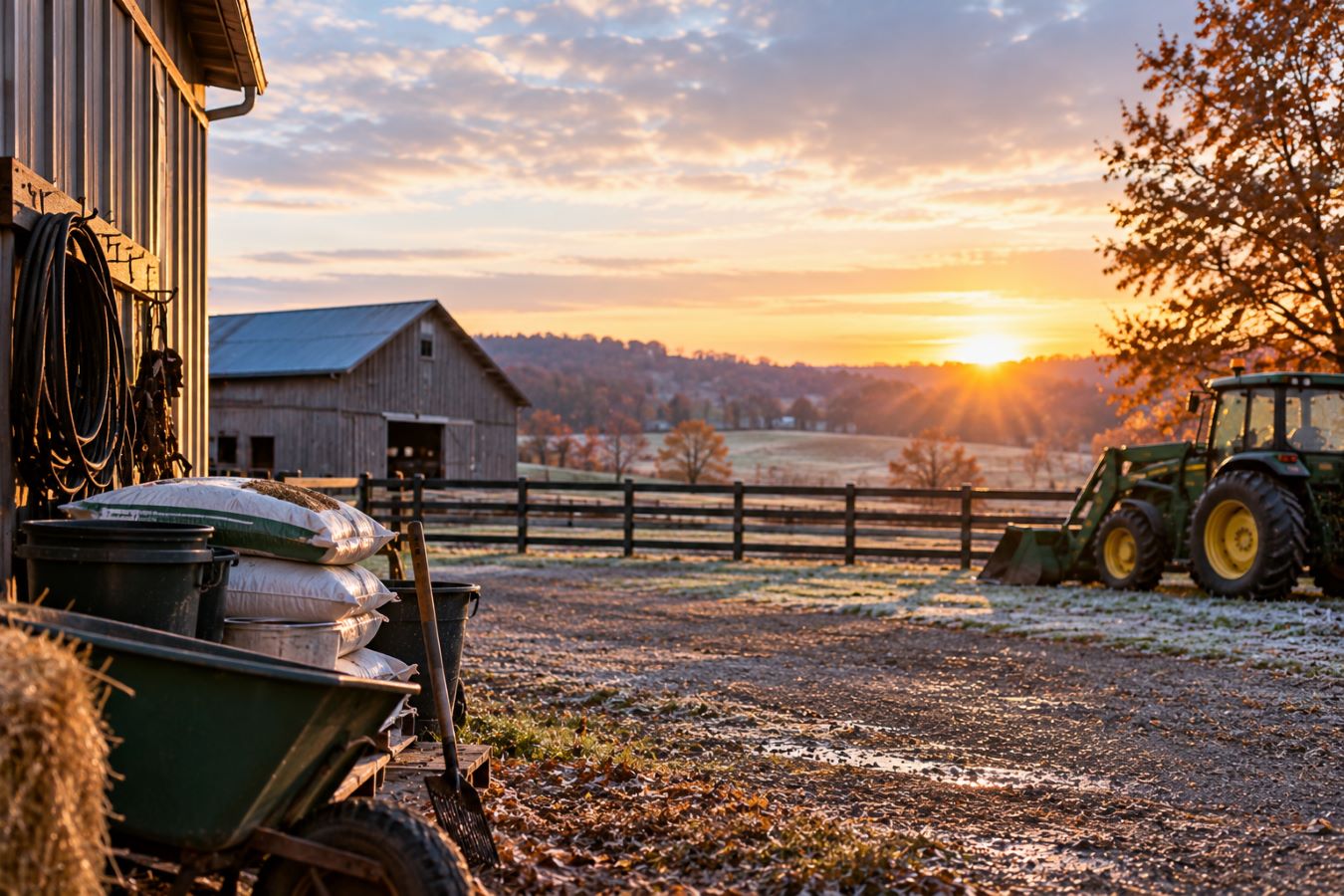
Keep feeding supplies accessible without blocking doors or walkways. Store frequently used items where you can reach them during poor conditions, while preserving suitable storage.
Prepare a Supply List Someone Else Can Follow
Your routine should remain understandable when another person handles chores.
Create a short written guide identifying:
- Which animals receive which products.
- Where supplies are stored.
- The established feeding instructions.
- How water is checked.
- Which gates must remain secured.
- Who to contact about a problem.
Use clear product names rather than descriptions such as “the brown bag.”
Include your veterinarian’s contact details and identify the person responsible for supply purchases. A written routine reduces confusion during travel, illness, or a busy workday.
Turn October Planning Into a Practical Store Visit
For farm supplies in Nicholasville, KY, a focused list makes shopping easier.
Bring feed labels, equipment details, photographs, and measurements relevant to your repairs. Ask about current availability rather than assuming every listed product is always in stock.
Separate immediate purchases from larger projects that need pricing or assessment.
Hall’s Farm & Feed is a family-owned store serving Nicholasville, Jessamine County, and surrounding Central Kentucky communities. Its product categories connect feed and animal supplies with fencing and property needs, making it a useful starting point for your fall review.
Keep the plan manageable: inspect, identify, purchase, complete the work, and check the result.
Frequently Asked Questions
What belongs on a winter farm preparation checklist?
Include feed inventory, hay condition, storage, bedding, water access, feeders, fencing, gates, and chore routes. Add backup procedures and contact information. Tailor the checklist to your animals and property, and use qualified advice for nutrition, health, electrical work, or technical maintenance concerns.
Should I buy extra animal feed in October?
Base purchases on actual consumption, product availability, storage capacity, and label guidance. Keeping a sensible reserve can support your routine, but buying more than you can store properly may create waste. Track usage and ask about replenishment options rather than choosing an arbitrary number of bags.
What is the difference between hay and straw?
Hay is commonly used as forage, while straw is often used for bedding and other property applications. They should not be treated as interchangeable. Specify the intended use when shopping, and confirm that the selected product suits the animals or project involved.
How should I prepare livestock waterers for winter?
Inspect the equipment, repair problems, and review how the system will function during freezing conditions. Follow manufacturer instructions for any freeze-protection components and obtain qualified help for electrical issues. Establish a backup water procedure and make sure anyone responsible for chores understands it.
What information should I bring to a farm and feed store?
Bring animal species, numbers, life stages, current feed labels, and relevant professional feeding instructions. For equipment or fencing, bring photographs, model information, and measurements. This helps staff identify suitable products and current options without guessing about your setup.
Does Hall’s Farm & Feed sell hay, straw, and fencing supplies?
Its website lists locally cut hay and straw, livestock feed, waterers, feeders, and fencing materials. Product availability can change, so call before traveling for a specific item or larger pickup. Describe the quantity and intended use to help the store answer your questions.
Complete Your Winter Farm Preparation Checklist Before Cold Weather
A useful winter farm preparation checklist connects the supplies you need with the maintenance that keeps daily care manageable.
Use October to inspect storage, review feed and hay, check water access, and complete fencing repairs. Keep animal-specific decisions grounded in appropriate guidance, and organize purchases around your actual routine.
Explore Hall’s Farm & Feed’s livestock products and farm and ranch supplies.
Call 859-885-4980 to ask about availability, or visit 201 Etter Dr., Nicholasville, KY 40356, with your October supply list.
